
FRUZAQLA® (fruquintinib) safety profile
Across multiple pivotal phase 3 clinical studies, FRUZAQLA demonstrated a manageable and predictable* safety profile.1-4
In the FRESCO and FRESCO-2 clinical trials, adverse reactions with FRUZAQLA were generally manageable and predictable.1-4
In pooled monotherapy studies, among the 911 patients who received FRUZAQLA, 23% were exposed for ≥6 months and 3.5% were exposed for ≥1 year. All patients received at least 1 dose of FRUZAQLA at the recommended 5 mg daily for the first 21 days of each 28-day cycle.1
The most common adverse reactions (incidence ≥20%) included1:
- hypertension
- palmar-plantar erythrodysesthesia (hand-foot skin reactions)
- proteinuria
- dysphonia
- abdominal pain
- diarrhea
- asthenia
*Predictable refers to ARs consistent with inhibition of VEGF and VEGFR.
Despite predictability, individual patient experiences may vary.
In FRESCO, the majority of ARs were manageable and predictable1-3
FRESCO was a single-country* study that evaluated fruquintinib safety and efficacy1,2
ARs that occurred in ≥10% of patients1
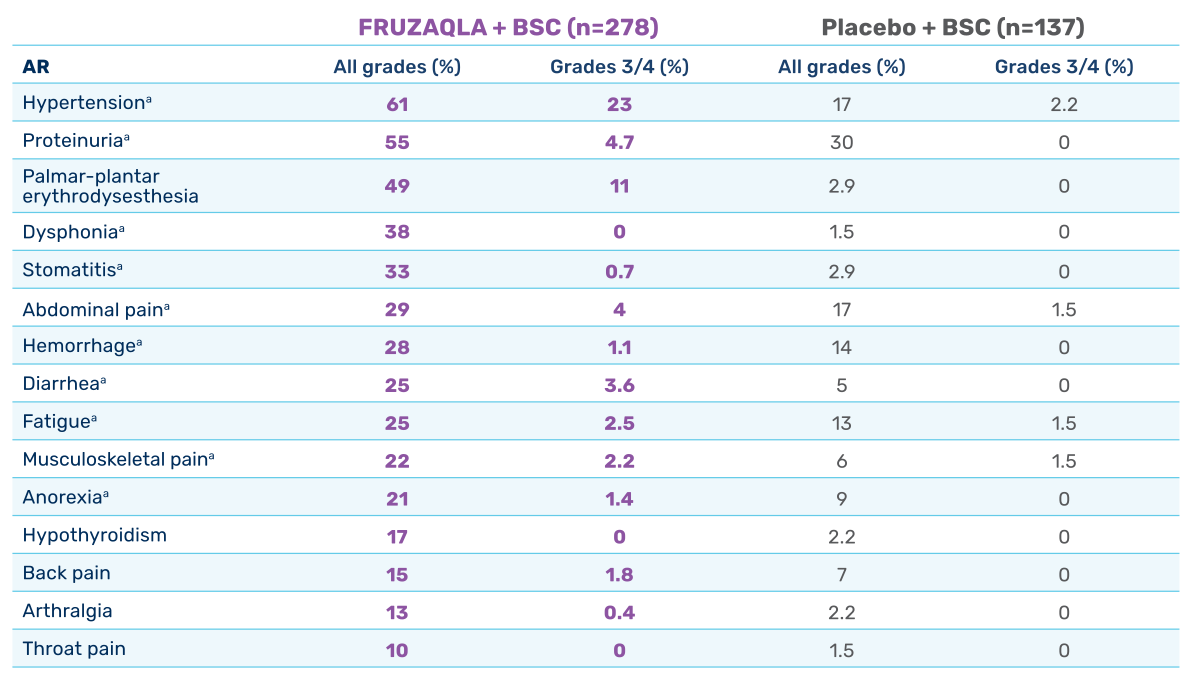
aRepresents a composite of multiple related terms.
- Predictable is defined as ARs that are consistent with inhibition of VEGF and VEGFR†1
- Serious ARs occurred in 15% of patients treated with FRUZAQLA + BSC. Serious ARs in ≥2% of patients treated with FRUZAQLA + BSC included intestinal obstruction (2.9%) and hemorrhage (2.2%)1
- Fatal ARs occurred in 7 (2.5%) patients treated with FRUZAQLA + BSC, including cerebral infarction (n=1), gastrointestinal hemorrhage (n=1), hemoptysis (n=1), bacterial infection (n=1), lung/lower respiratory infection (n=2), and multiple organ dysfunction (n=1)1
†Despite predictability, individual patient experiences may vary.

FRUZAQLA had low Grade 3/4 laboratory abnormalities1
Select laboratory abnormalities worsening from baseline and occurring in ≥20% of patients1,a,b
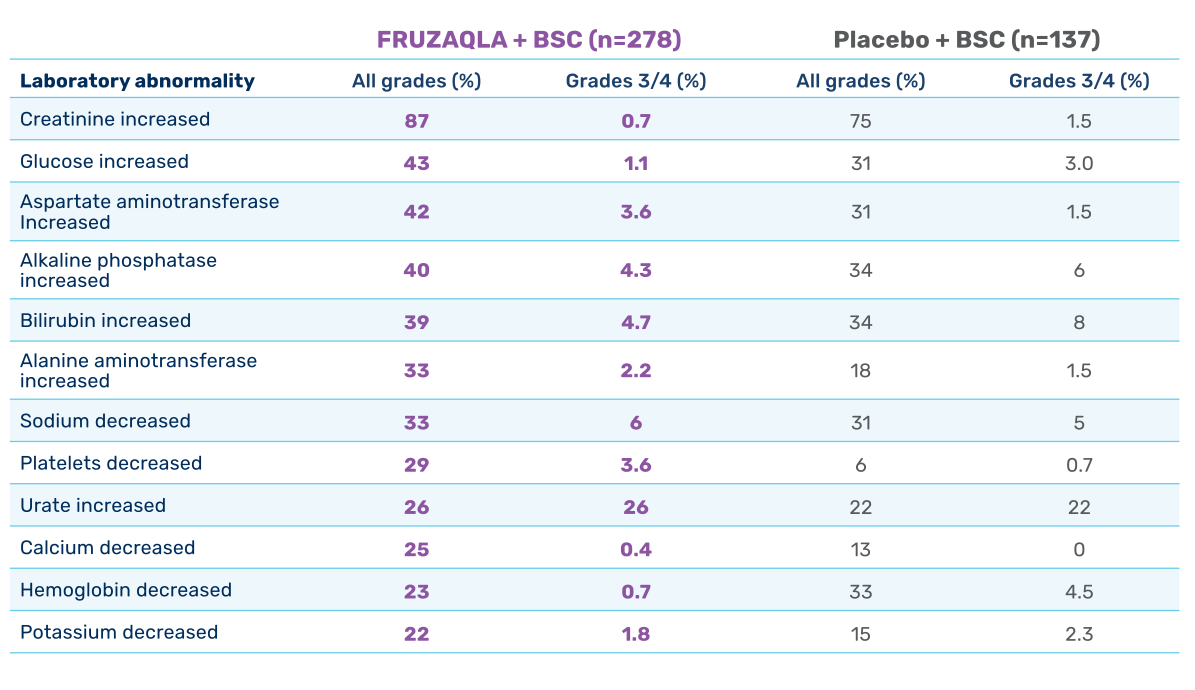
aGraded according to NCI CTCAE version 4.03.1
bEach test incidence is based on the number of patients who had both baseline and at least one on‑study laboratory measurement available: FRUZAQLA (range: 257-277) and placebo (range: 126-134).1
Manageable safety profile with FRUZAQLA as demonstrated in the FRESCO trial1,2


AR=adverse reaction; BSC=best supportive care; NCI CTCAE=National Cancer Institute Common Terminology Criteria for Adverse Events; VEGF=Vascular endothelial growth factor; VEGFR=Vascular endothelial growth factor receptor.
Clinical results with FRUZAQLA
Learn about the efficacy results from the FRESCO and FRESCO-2 studies in patients with previously treated mCRC.
Evolving patient unmet needs in mCRC
Learn how shifting demographics and daily activity considerations are shaping the treatment needs of patients with metastatic colorectal cancer.
FRUZAQLA patient profiles
Learn about patient types and why they may benefit from FRUZAQLA.