FRESCO STUDY DESIGN
FRESCO was a single-country,* multicenter, randomized, double-blind, placebo-controlled phase 3 study1,2
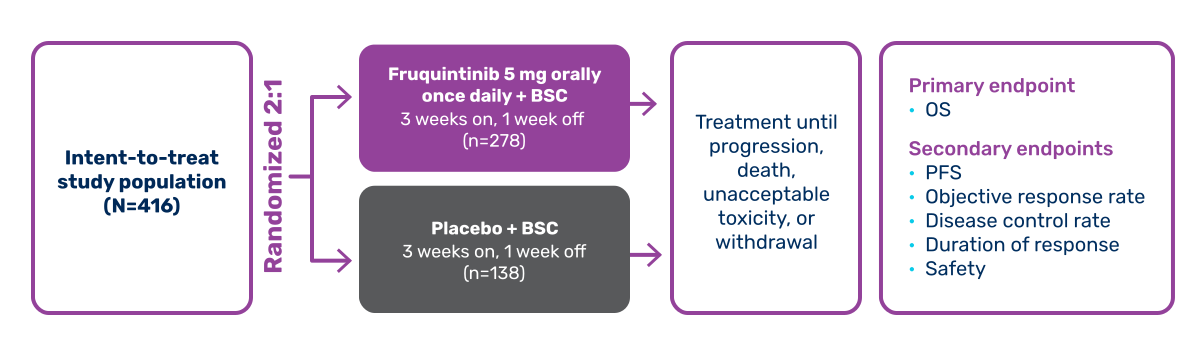
Inclusion criteria1,2
- Aged 18-75
- ECOG PS 0‑1
- Progression during or after prior treatment with fluoropyrimidine‑, oxaliplatin‑, or irinotecan‑based chemotherapy
- No prior treatment with VEGFR inhibitor
Stratification2
- Prior VEGF inhibitor therapy (yes vs no)
- K-RAS mutational status (wild type vs mutant)

*The FRESCO study was conducted in China.
FRESCO was a robust clinical trial that included a population of patients who had received ≥2 prior lines of therapy1,3,4
FRESCO patient characteristics1,3
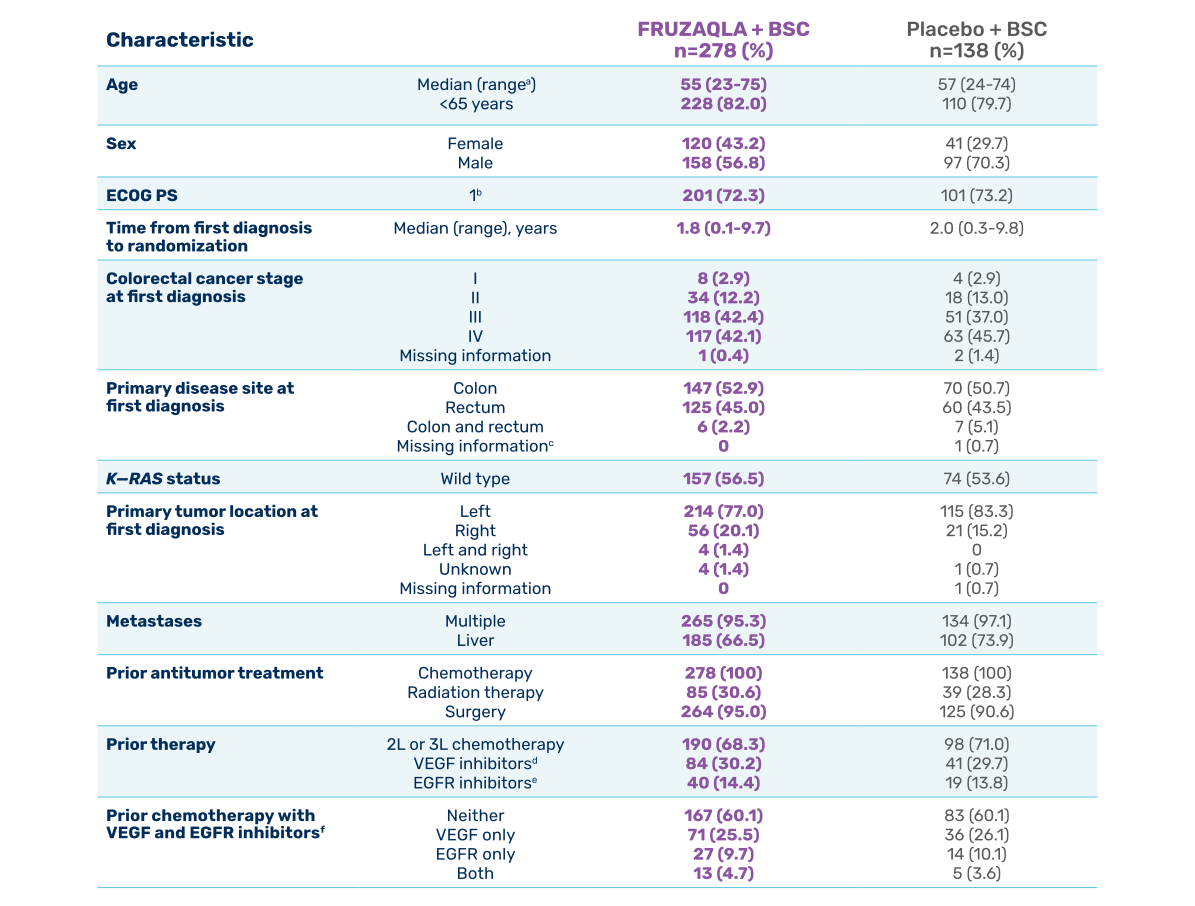
aMinimum-maximum.4
bAll eligible patients had ECOG PS=0 or 1 (0=fully active, able to carry on all predisease activities without restriction; 1=restricted in physically strenuous activity but ambulatory and able to carry out work of a light or sedentary nature).2
cReferred to cecum.2
dIncluded 120 patients who had received bevacizumab (fruquintinib arm, 83; placebo arm, 37) and 5 patients who had received aflibercept (fruquintinib arm, 1; placebo arm, 4).2
eCetuximab.2
fNo patients received VEGFR inhibitors.2

FRESCO OVERALL SURVIVAL (OS)
Meaningful time: In a study of FRUZAQLA + BSC vs placebo + BSC in patients with previously treated mCRC, FRUZAQLA demonstrated a significant nearly 3-month improvement in median OS.1
OS in patients with previously treated mCRC
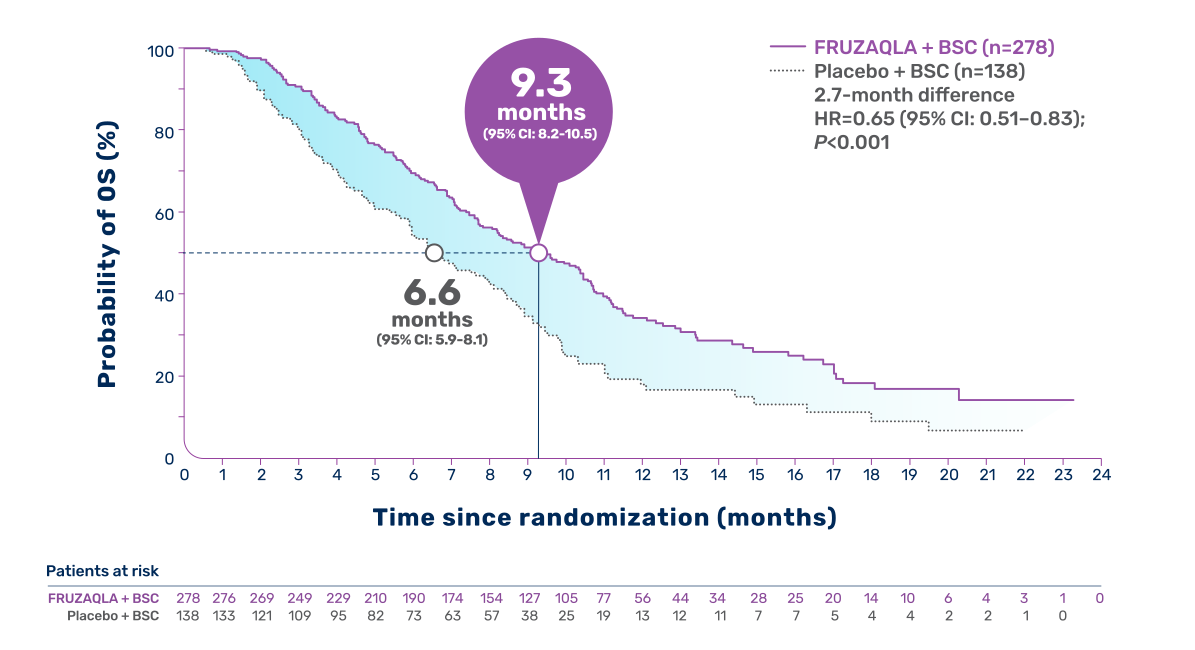
- Rapid separation of OS curve beginning at Month 21,2
CI=confidence interval; HR=hazard ratio.

OS benefit was consistent across most prespecified subgroups2,4
Results seen regardless of duration of metastatic disease, RAS status, prior types of therapy, and presence of liver metastases
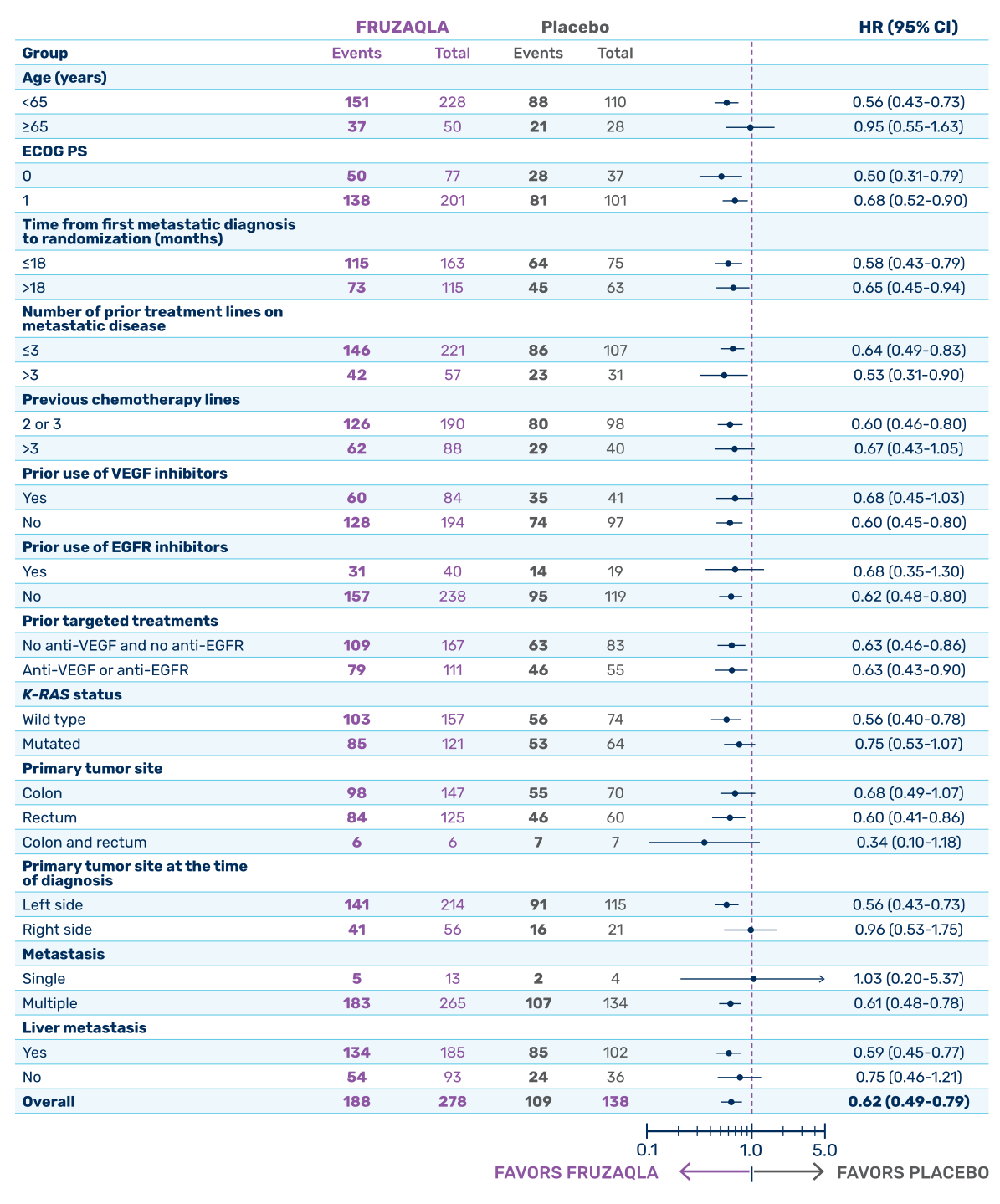
The FRESCO study was not powered to show significance in OS across these specified groups.
FRESCO DISEASE CONTROL
FRUZAQLA improved anti-tumor activity vs placebo1-3
Disease control rate was stable for more than half of patients treated with FRUZAQLA + BSC1,2*

Complete response and more partial response and stable disease were seen with FRUZAQLA + BSC vs placebo + BSC4
This study was not powered to show significance in disease control rate.
*Disease control was defined as a complete response, partial response, or stable disease for ≥8 weeks.2
FRESCO PROGRESSION-FREE SURVIVAL (PFS)
In a study of FRUZAQLA + BSC vs placebo + BSC in patients with previously treated mCRC
FRUZAQLA more than doubled median progression-free survival1,2
PFS in patients with previously treated mCRC1,2
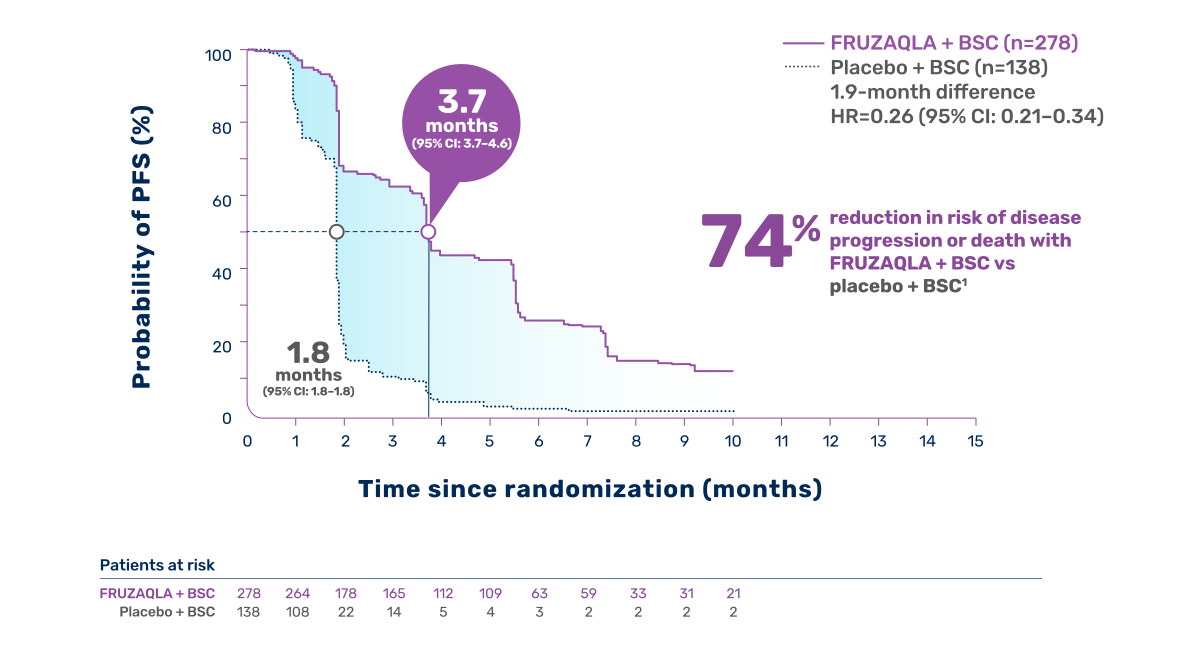
- PFS curve had early and rapid separation that was evident at Month 11,2
Statistical significance is not implied. P value for the PFS analysis in FRESCO was not included due to lack of multiplicity adjustment for this analysis.1
Consistent PFS benefit was demonstrated across all prespecified subgroups.2
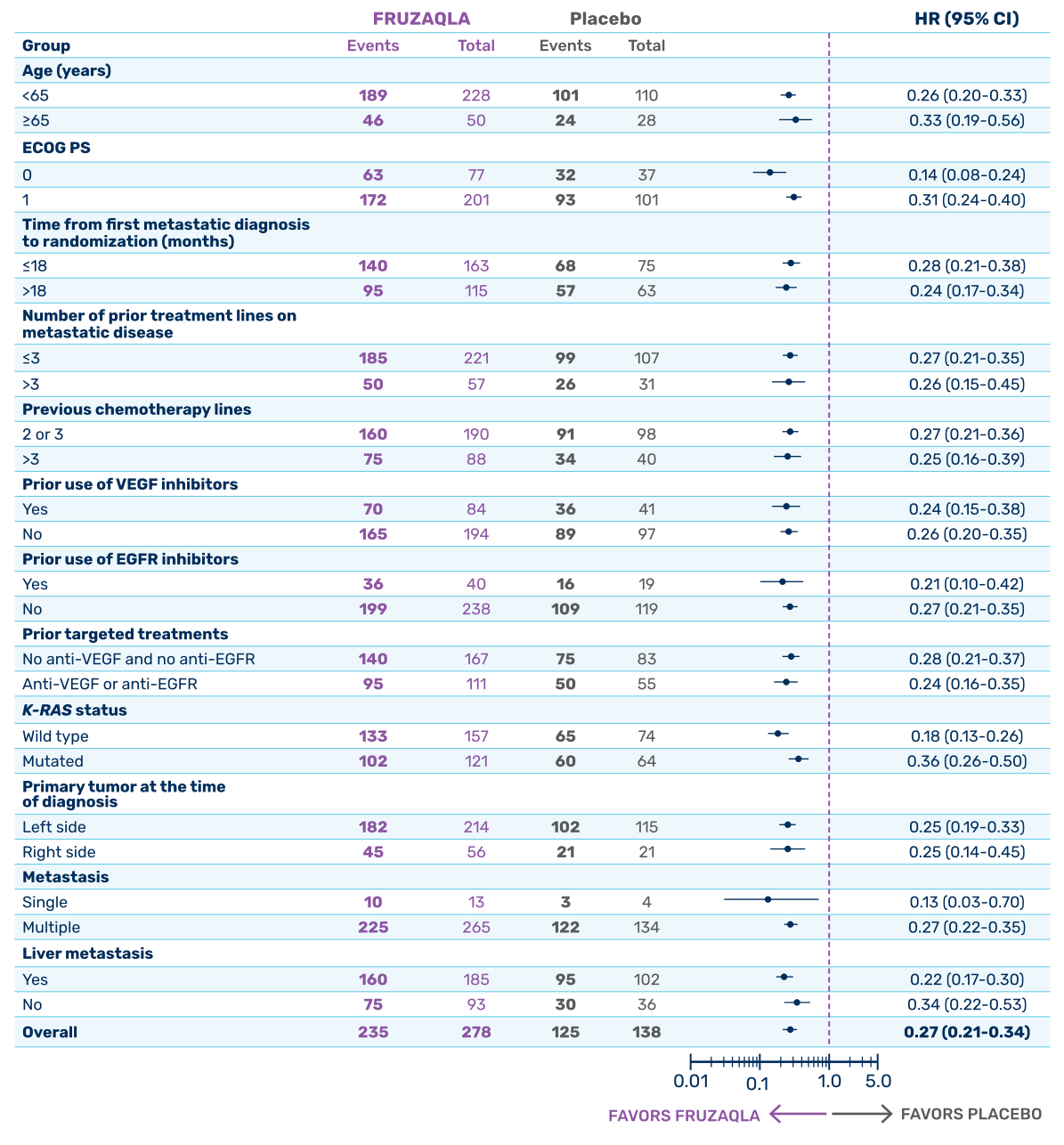
The FRESCO study was not powered to show significance in PFS across these specified groups.
2L=second-line; 3L=third-line; AR=adverse reaction; BSC=best supportive care; CI=confidence interval; DCR=disease control rate; DoR=duration of response; ECOG PS=Eastern Cooperative Oncology Group performance status; EGFR=epidermal growth factor receptor; HR=hazard ratio; K-RAS=Kirsten rat sarcoma; ORR=objective response rate; OS=overall survival; PFS=progression-free survival; RAS=rat sarcoma; VEGF=vascular endothelial growth factor; VEGFR=vascular endothelial growth factor receptor.