In FRESCO-2, the majority of ARs were manageable and predictable1-3

FRESCO-2 was a global, double-blind, placebo-controlled study that evaluated fruquintinib safety and efficacy1,2

ARs occurring in ≥10% of patients1
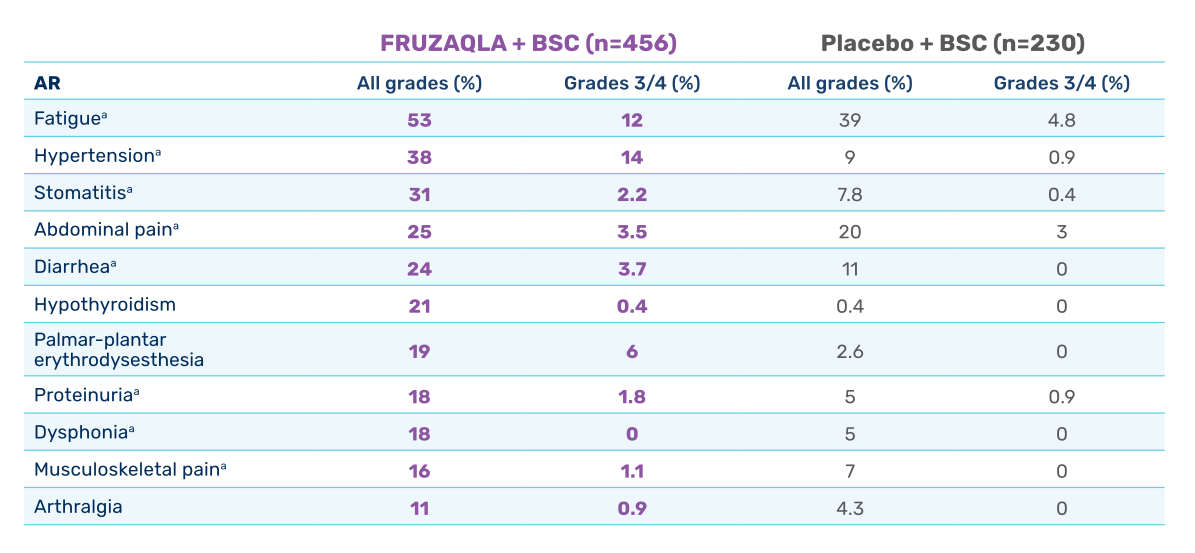
In the FRESCO-­2 clinical trial, adverse reactions occurring in ≥10% of patients included fatigue, hypertension, stomatitis, abdominal pain, diarrhea, hypothyroidism, palmar-plantar erythrodysesthesia, proteinuria, dysphonia, musculoskeletal pain, and arthralgia.
This visually hidden text should include a summary of the image. It should be descriptive enough to replace the image. This text is scrapeable but not available visually so should include any keywords relevant to the image.

aRepresents a composite of multiple related terms.1

  • Predictable refers to ARs consistent with inhibition of VEGF and VEGFR*3
  • Serious ARs occurred in 38% of patients treated with FRUZAQLA + BSC. Serious ARs in ≥2% of patients treated with FRUZAQLA + BSC included hemorrhage (2.2%) and gastrointestinal perforation (2.0%)1
  • Fatal ARs occurred in 14 (3.1%) patients treated with FRUZAQLA + BSC. Fatal ARs occurring in ≥2 patients treated with FRUZAQLA + BSC include pneumonia (n=3), sepsis/septic shock (n=2), and hepatic failure/encephalopathy (n=2)1

*Despite predictability, individual patient experiences may vary

FRUZAQLA®'s safety profile has a low rate of myelosuppression.
FRUZAQLA demonstrated a low rate of myelosuppression similar to placebo5:
  • Hematologic abnormalities of grade 3/4 in >2% of patients:
    • Anemia: 0.9% with FRUZAQLA + BSC vs 3.2% with placebo + BSC
    • Decreased lymphocyte count: 5.6% with FRUZAQLA + BSC vs 4.6% with placebo + BSC

FRUZAQLA had low Grade 3/4 laboratory abnormalities1

Select laboratory abnormalities worsening from baseline and occurring in ≥20% of patients1,a,b
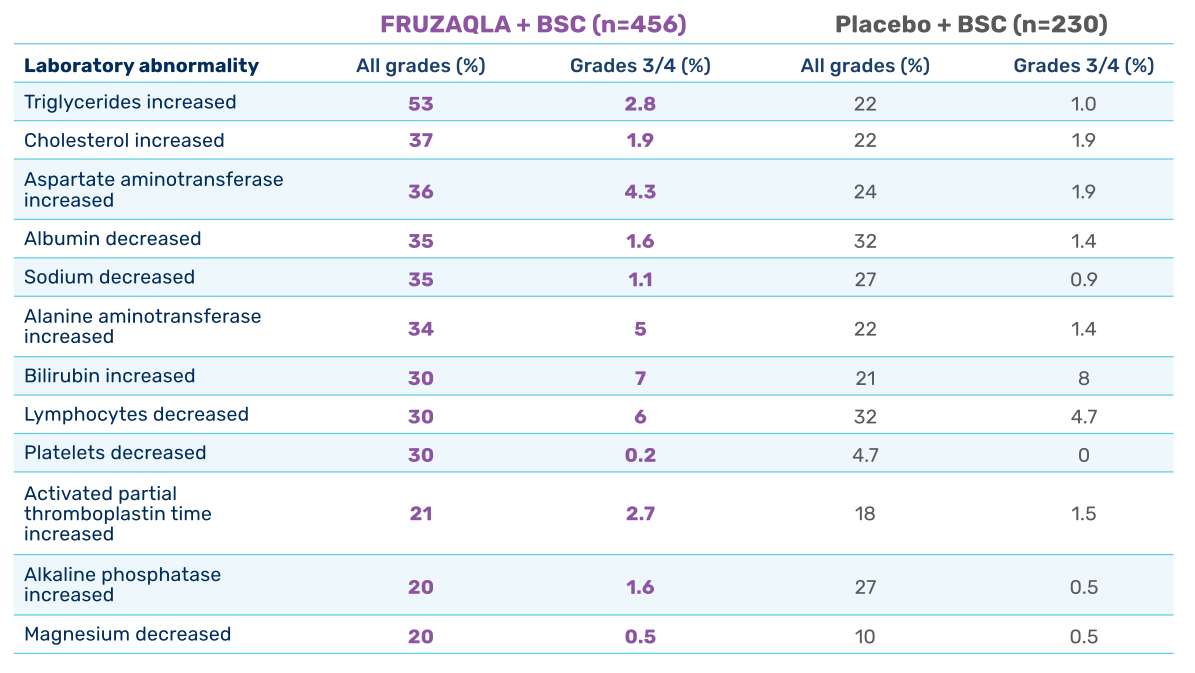
In the FRESCO-­2 clinical trial, select laboratory abnormalities occurring in ≥20% of patients included an increase in triglycerides, cholesterol, aspartate aminotransferase, alanine aminotransferase, bilirubin, activated partial thromboplastin time, and alkaline phosphatase and a decrease in albumin, sodium, lymphocytes, platelets, and magnesium.

aGraded according to NCI CTCAE version 5.0.1
bEach test incidence is based on the number of patients who had both baseline and at least one on‑study laboratory measurement available: FRUZAQLA (range: 409-444) and placebo (range: 195-216).1 


Manageable safety profile with FRUZAQLA as demonstrated in the FRESCO-2 trial1,4

Dose reductions due to ARs: 47% with FRUZAQLA + BSC vs 27% with placebo + BSC and 24% with FRUZAQLA + BSC vs 4% with placebo + BSC.
Adverse reactions were managed through dose modifications when appropriate1,2:
  • Dose interruptions: 47% with FRUZAQLA + BSC vs 27% with placebo + BSC
  • Dose reductions: 24% with FRUZAQLA + BSC vs 4% with placebo + BSC
     
FRUZAQLA® has a low rate of discontinuation due to ARs.
Fewer than 1 in 5 patients discontinued due to ARs1,2
  • 20% with FRUZAQLA + BSC vs 21% for placebo + BSC

ARs=adverse reactions; BSC=best supportive care; VEGF=vascular endothelial growth factor; VEGFR=vascular endothelial growth factor receptor.