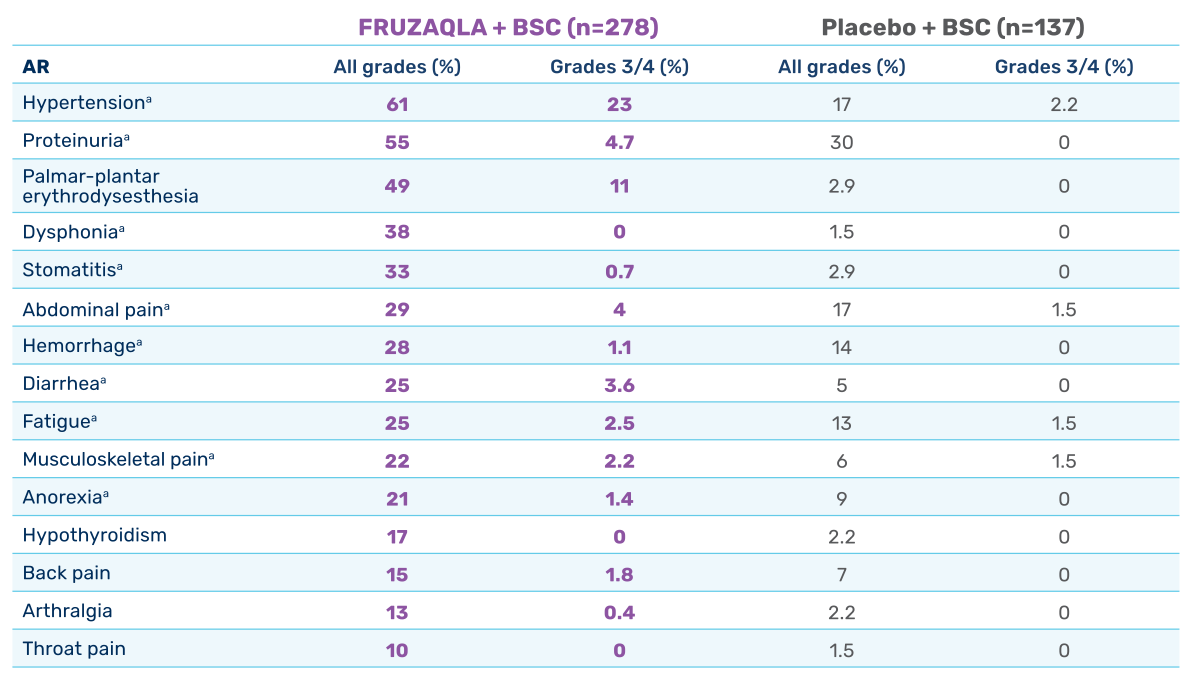
In FRESCO, the majority of ARs were manageable and predictable1-3
FRESCO was a single-country* study that evaluated fruquintinib safety and efficacy1,2
ARs that occurred in ≥10% of patients1
*The FRESCO study was conducted in China.
aRepresents a composite of multiple related terms.
aRepresents a composite of multiple related terms.
- Predictable is defined as ARs that are consistent with inhibition of VEGF and VEGFR†1
- Serious ARs occurred in 15% of patients treated with FRUZAQLA + BSC. Serious ARs in ≥2% of patients treated with FRUZAQLA + BSC included intestinal obstruction (2.9%) and hemorrhage (2.2%)1
- Fatal ARs occurred in 7 (2.5%) patients treated with FRUZAQLA + BSC, including cerebral infarction (n=1), gastrointestinal hemorrhage (n=1), hemoptysis (n=1), bacterial infection (n=1), lung/lower respiratory infection (n=2), and multiple organ dysfunction (n=1)1
†Despite predictability, individual patient experiences may vary.

FRUZAQLA had low Grade 3/4 laboratory abnormalities1
Select laboratory abnormalities worsening from baseline and occurring in ≥20% of patients1,a,b
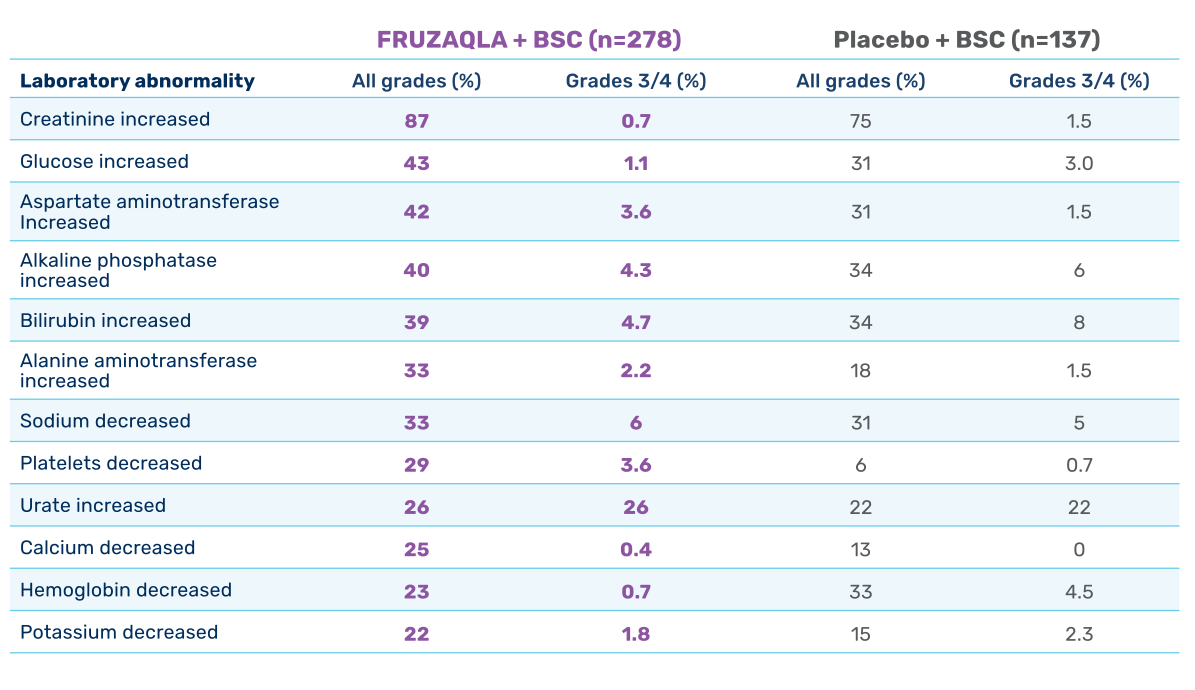
aGraded according to NCI CTCAE version 4.03.1
bEach test incidence is based on the number of patients who had both baseline and at least one on‑study laboratory measurement available: FRUZAQLA (range: 257-277) and placebo (range: 126-134).1
Manageable safety profile with FRUZAQLA as demonstrated in the FRESCO trial1,2


AR=adverse reaction; BSC=best supportive care; NCI CTCAE=National Cancer Institute Common Terminology Criteria for Adverse Events; VEGF=Vascular endothelial growth factor; VEGFR=Vascular endothelial growth factor receptor.